Ashoka Mission
Summary: A peaceful Buddhist complex and serene spiritual retreat offering a calm, green escape from the busy Qutub Minar area.
📍 Location & Access
- Nearest Metro: Qutub Minar Station.
- Best Exit: Gate No. 2.
- Directions: Located on the opposite side of the road from the station; easily reachable by crossing the foot overbridge.
🎟️ Visitor Essentials
- Entry Fee: Free.
- Timings: Remains open throughout the day.
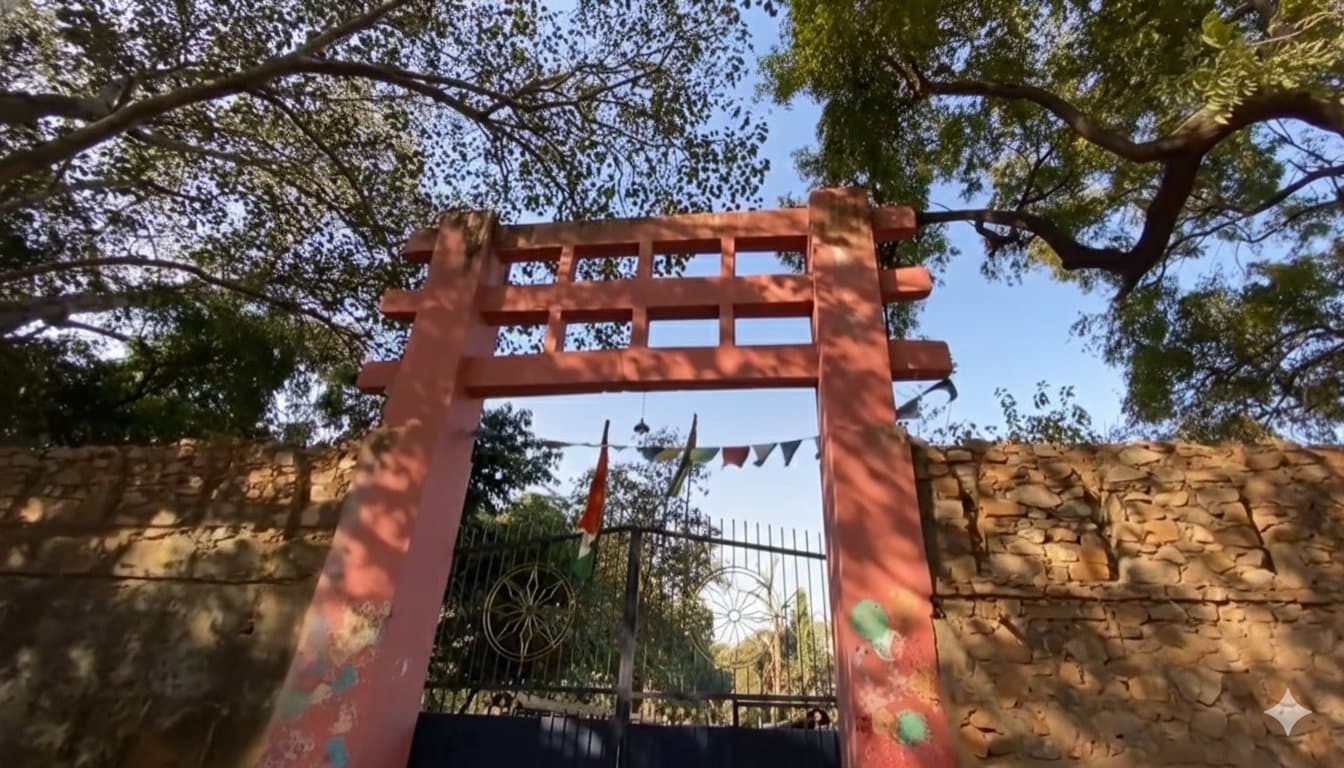
- The Red Gate: If it appears closed, simply knock—a guard usually opens it for visitors.
✨ Features & Symbolism
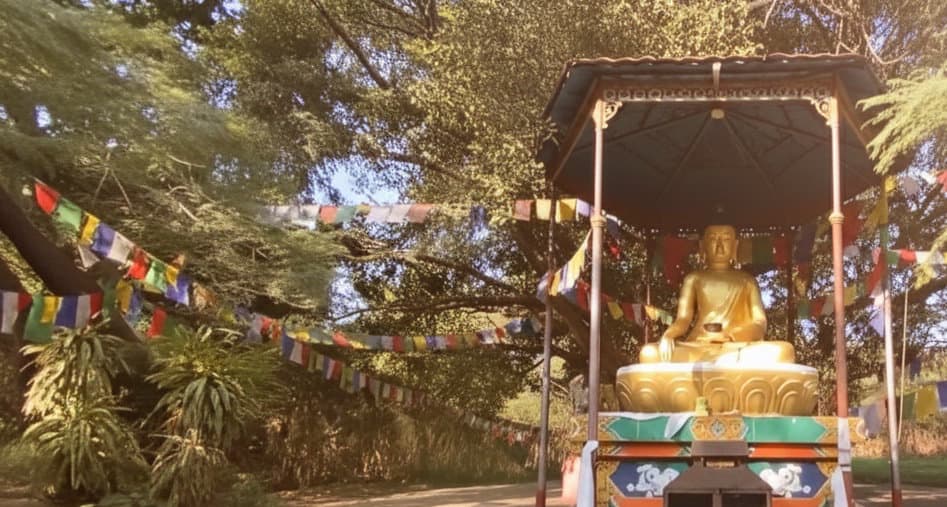
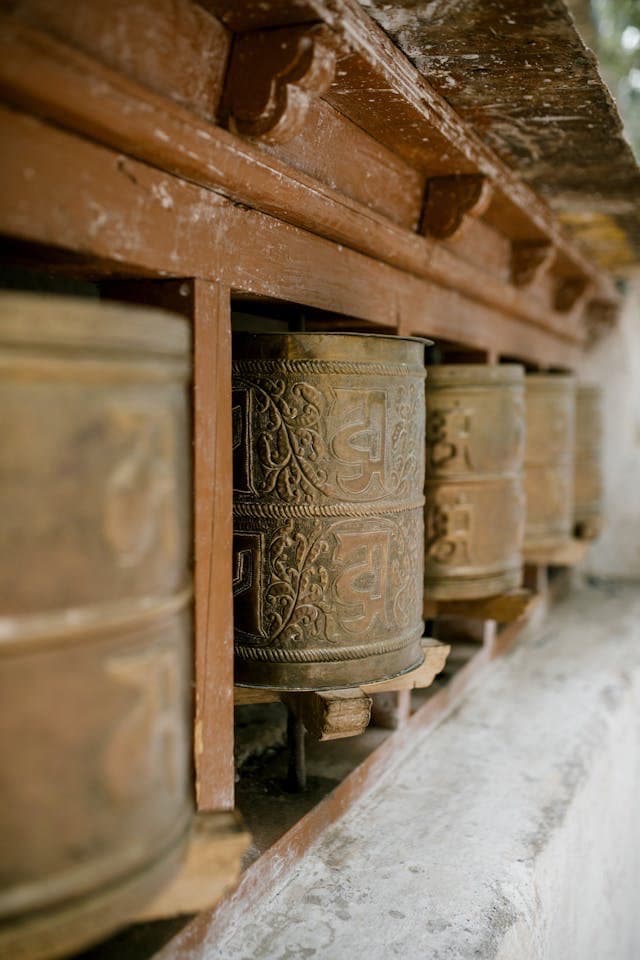
- Buddhist Icons: Features a Buddha statue, prayer flags, and rolling cylindrical metal prayer wheels used for meditation.
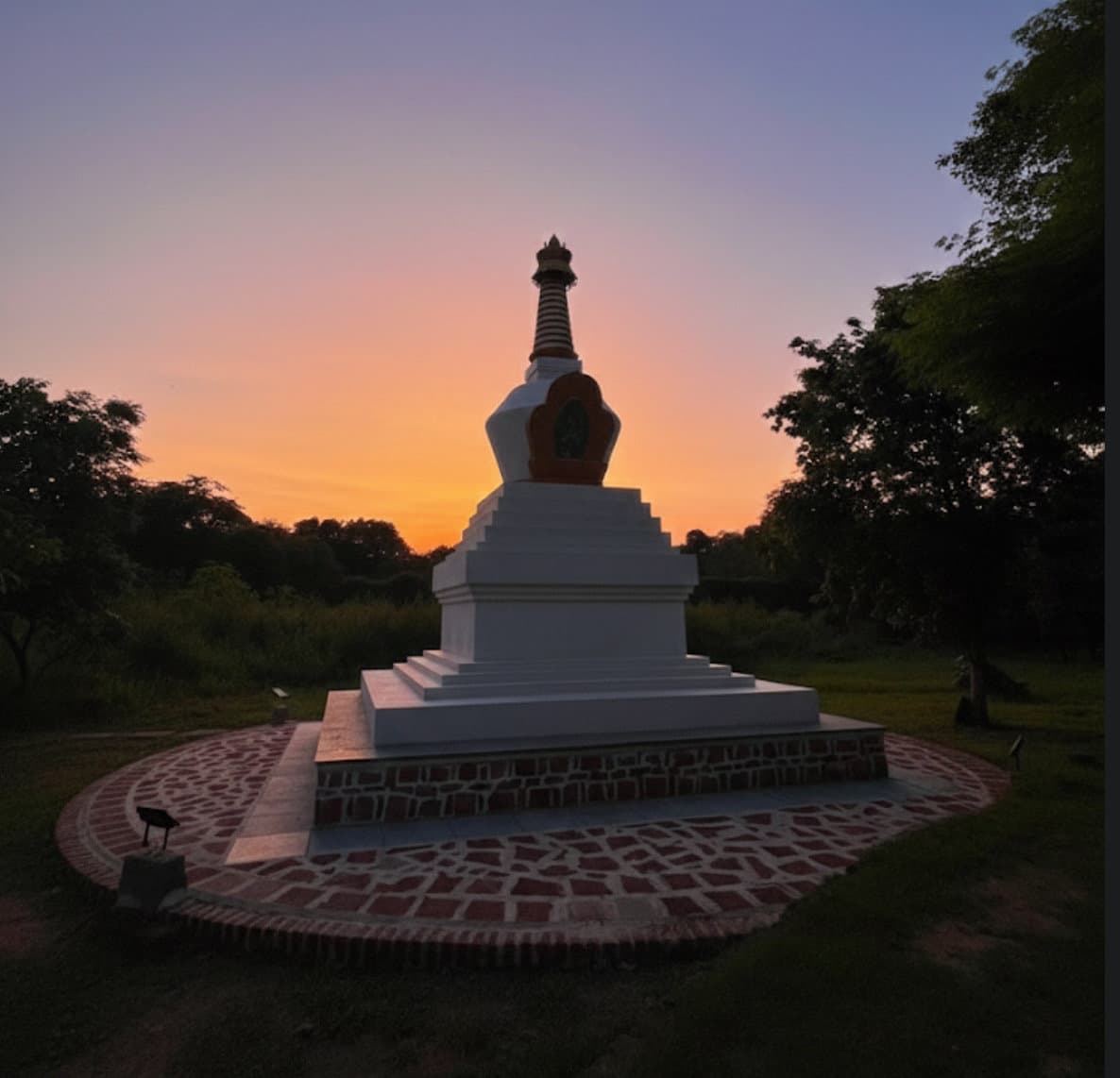
- Architecture: Includes a Buddhist temple and small stupas with a distinct Himalayan Buddhist character.
- Nature: A large, respected banyan tree stands within the premises as a symbol of spiritual presence.
⚠️ Important Notes
- Photography: May sometimes be restricted; it is advisable to ask the guard before recording or taking photos.
- Purpose: As a "Mission," it focuses on preserving Buddhist teachings and community support in addition to being a place of worship.
The Ashoka Mission in Delhi is a peaceful Buddhist complex located on the opposite side of the road from Qutub Minar Metro Station, near Exit Gate 2. Visitors can reach it easily by crossing the road using the foot overbridge. 👉Know more about location on the map
The mission remains open throughout the day and entry is free. As you enter the street, you’ll notice a red gate that may appear closed. You can simply knock, and a guard usually opens it for visitors.
Inside, the surroundings are lush green, calm, and quiet, offering a sharp contrast to the busy Qutub Minar area. The space strongly reflects Buddhist culture and symbolism. You’ll see a Buddha statue, prayer flags, and rolling cylindrical metal prayer wheels, which are commonly used in Buddhism as part of meditation and devotional practice.
The complex also includes small stupas and a Buddhist temple. Many people from Ladakh live in or are associated with this area, which gives the mission a distinct Himalayan Buddhist character. A large banyan tree stands within the premises—trees like these are often respected in Buddhist tradition as symbols of shelter, continuity, and spiritual presence.

Photography and videography may sometimes be restricted, so it’s advisable to ask the guard before recording.
Why it is called a “Mission”
The word “mission” here refers to purpose, not a military or secret activity. In a Buddhist context, a mission is an organization created to spread and preserve Buddhist teachings, support the community, and promote values such as peace, compassion, and mindfulness.
Unlike a temple, which is mainly a place of worship, a mission often includes cultural activities, teaching, meditation, and community support. The Ashoka Mission carries this broader role, continuing the legacy of Emperor Ashoka, who helped spread Buddhism through peaceful means.
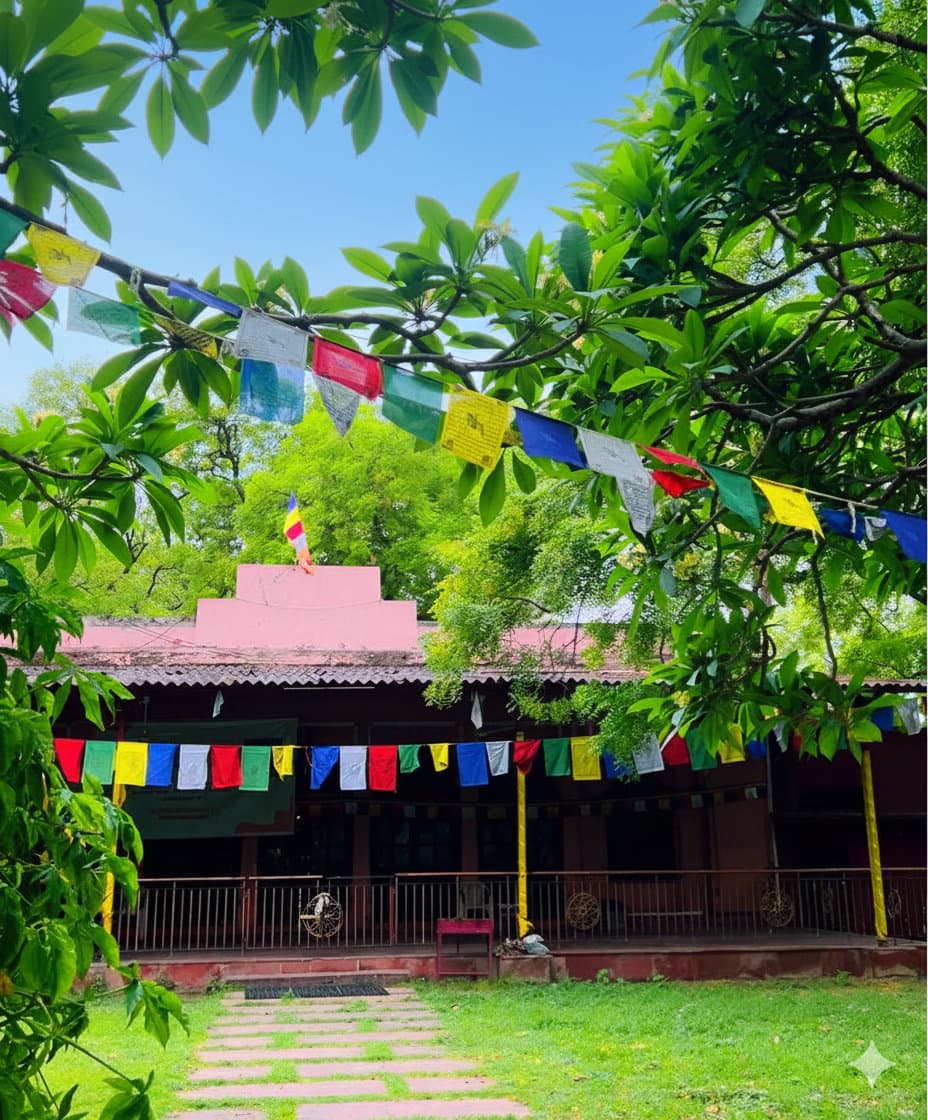
Overall, the Ashoka Mission is not a crowded tourist attraction but a serene spiritual retreat, ideal for quiet reflection, learning about Buddhist culture, or simply spending time in a calm green space near Qutub Minar.
